
Prior to joining Lamprell, you held finance roles at Seadrill and Ernst & Young, working across multiple continents and sectors. How did those earlier experiences shape your approach to finance today?
I started my career at Ernst & Young at the age of 18, which was both daunting and incredibly formative. Being surrounded by experienced professionals so early on taught me the importance of hard work, accountability, humility, listening and learning from others. It wasn’t just about technical skills; it was about understanding how trust is built, how teams work under pressure, and how responsibility comes with even the smallest decisions.
My time at Seadrill added a very different but equally important dimension. Working in a fast-paced, US-listed global business exposed me to different cultures, leadership styles, and challenges. It helped me appreciate that finance works best when it’s closely connected to people and operations. Those experiences shaped how I work today. I see finance as a partner to the business, focused on relationships, collaboration and supporting good decision-making.
You’ve been with Lamprell for nearly a decade. What have been the biggest changes you’ve seen, and what excites you about the future?
Lamprell has undergone a profound transformation. We have moved through periods of challenge, restructuring, and reset, and emerged with a clearer strategy, stronger governance and a more resilient operating model. The scale of our backlog, our re-entry into major offshore and renewables projects, and the confidence we are seeing from clients and partners is genuinely exciting. What excites me most is that this growth is now underpinned by lessons learned, and we are building a stronger, more disciplined Lamprell for the long term.

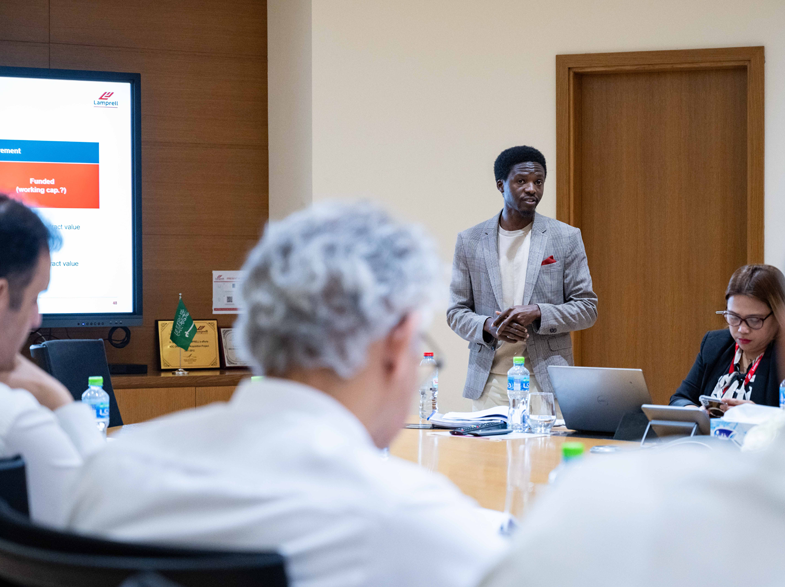
Over the years, how has your role evolved, and what does a typical day look like for you now as Finance Director?
My role has evolved from being largely finance-focused to being deeply integrated into the broader leadership and decision-making of the business. A typical day now spans everything from project reviews and cash flow planning to bank and stakeholder engagement, strategic planning, and supporting our operational teams. No two days are the same, and that’s part of the appeal. The role is as much about judgment, prioritisation, and leadership as it is about finance.
How do you balance financial discipline with the need to invest in growth, especially as Lamprell enters a new phase of expansion?
It’s about being very clear on where we take risks and where we don’t. Financial discipline doesn’t mean saying “no” to growth — it means making informed, deliberate choices. We focus on projects and investments that align with our strategy, where risks are understood, mitigated, and appropriately priced. Strong cash management, robust forecasting, and early visibility into issues allow us to invest with confidence rather than solely with caution.
What role does the finance team play in keeping project delivery on track, from planning through to execution?
The finance team is embedded throughout the project lifecycle. From bid pricing and contract structuring to cash flow forecasting, cost control, and performance monitoring, finance provides transparency and early warning signals. Our role is to support project teams with timely, accurate information so issues can be addressed early, not after the fact. When finance and operations work closely together, project outcomes improve materially.
Lamprell operates across several regions and sectors. What are some of the financial challenges that come with managing such a diverse portfolio?
Managing complexity is the main challenge. Different regulatory environments, currencies, tax regimes, and client expectations all require careful coordination. Add to that the mix of oil & gas and renewables, each with distinct risk profiles and commercial structures. The key is having strong systems, consistent governance and local expertise, while maintaining a clear group-wide view of risk, liquidity, and performance.
You’ve worked in both corporate finance and professional services. What do you enjoy most about working in an operational business like Lamprell?
In an operational business, you see the direct impact of decisions. You are not just advising, you are accountable for outcomes. I enjoy working alongside operations and seeing complex projects come to life. There’s a real sense of shared purpose when everyone is aligned around delivery, safety, and performance.
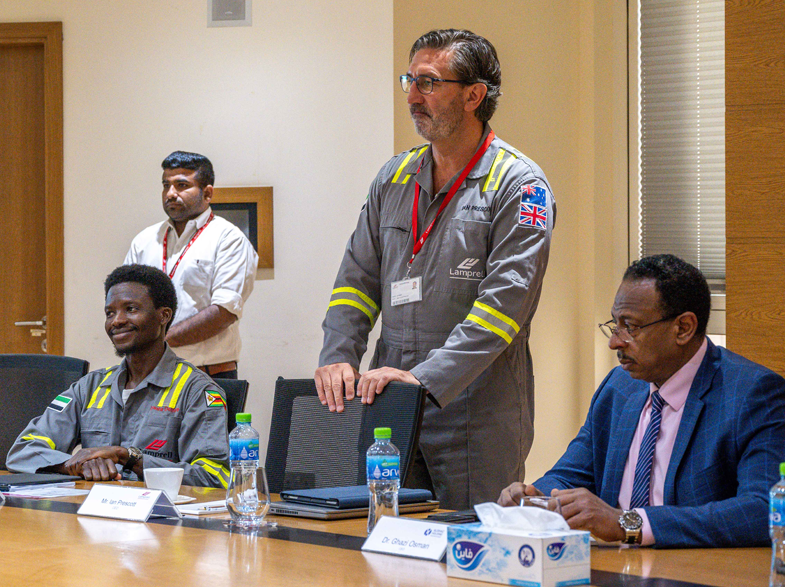

What advice would you give to young finance professionals looking to grow their careers in the energy sector?
Build strong fundamentals, but don’t limit yourself to spreadsheets. Spend time understanding the business, ask questions and get as close to operations as possible. Be curious, adaptable, and willing to step outside your comfort zone – and don’t be afraid to make mistakes along the way. The energy sector is evolving rapidly, and those who combine technical skill with commercial insight and integrity will always be in demand.
What was life like growing up in Zimbabwe, and how has that shaped who you are today?
Growing up in Zimbabwe during a period of hyperinflation taught me to be resilient and calm under pressure, and, more importantly, to value people, not just outcomes. It was an environment where adaptability was essential, and collaboration wasn’t optional — it was how you navigated challenges together. Those experiences shaped my appreciation for teamwork, perspective, and perseverance, and they continue to influence how I lead, listen, and engage with others both inside and outside of work.
Tell us a bit about yourself outside of work — what do you enjoy doing in your downtime?
Outside of work, I make a conscious effort to set aside time for family, particularly on weekends. I also enjoy football and staying active, and I value opportunities to give back through community service. That balance outside the office is important to me as it helps maintain perspective and energy for my work. Ultimately, we work for our loved ones!